Last summer I applied for a job with a federal agency. After a panel interview and a reference check, I received a tentative offer letter with pertinent details related to the role; salary, duty station, start date etc. I was told prior to my official onboarding I needed to undergo an additional background check after accepting the position as outlined in my offer letter.
Reading over it, I noticed no mention of telework or remote work options despite being told during my interview that the agency remained in a maximum telework posture.
I followed up with the agency and spoke with my future boss relaying my enthusiasm for joining the team, and disclosed my need for telework as a reasonable accommodation.
“I’d follow up with H.R. about that,” she said.
After several e-mails back and forth, the H.R. Specialist continually refused to acknowledge my request that telework be included in my offer letter prior to signing. As I was not an employee yet, I was told a potential telework schedule could be discussed with my supervisor only after onboarding.
My request for telework became a game of finger pointing and an impossible Catch-22.
This lack of imagination led to my decision to ultimately decline a role that I was otherwise excited to begin.
From this encounter I learned my most valuable lesson as a disabled job candidate. It’s something that I lean into deeply during interviews.
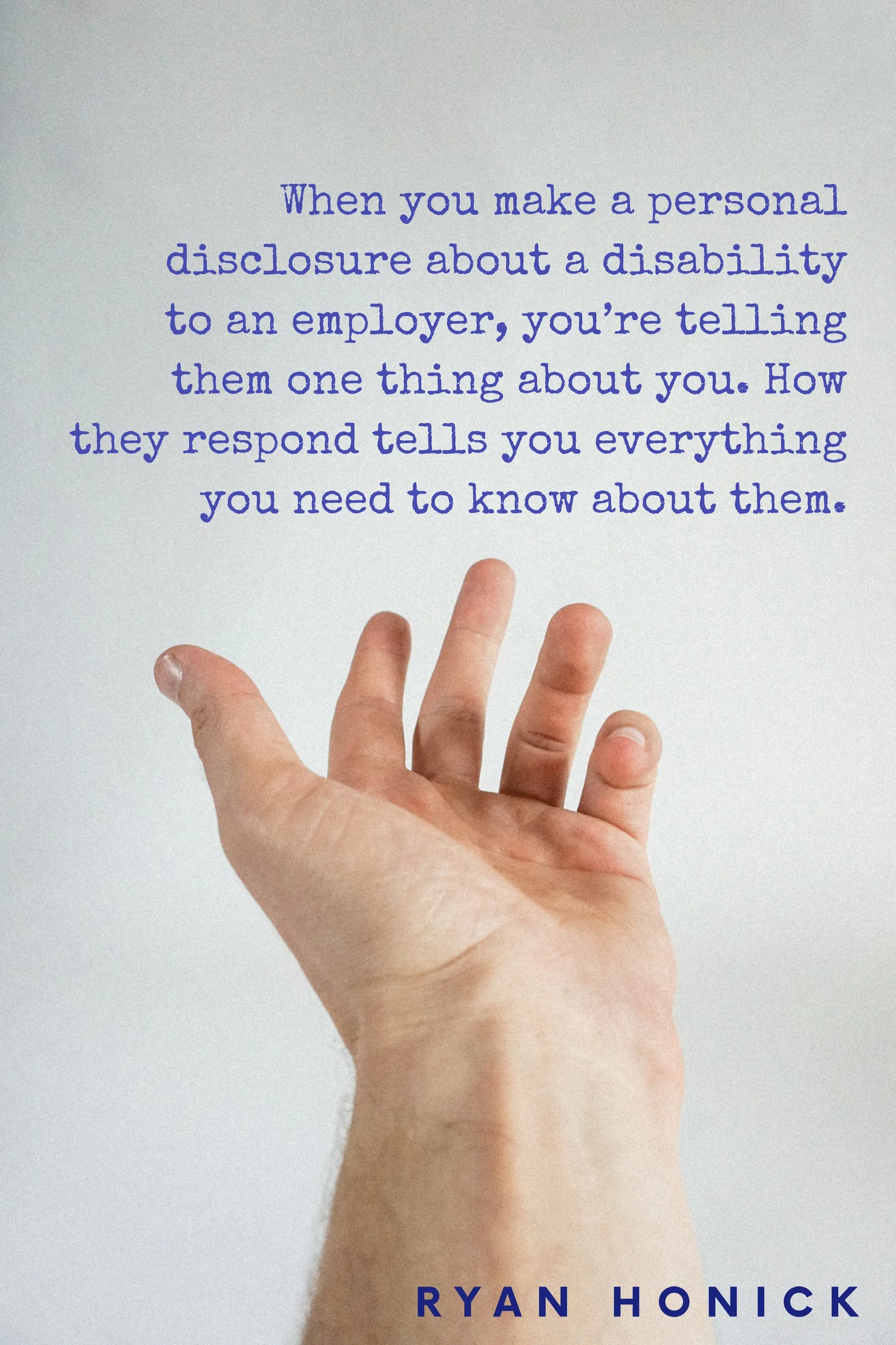
When you make a personal disclosure about a disability to an employer, you’re telling them one thing about you.
How they respond tells you everything you need to know about them.
It’s an amazing sorting hat. Use it.
How To Spot The Best Disability Friendly Workplaces